Choosing an architectural cladding material requires a balance between design objectives and technical requirements. Surface appearance may influence the initial decision, but long-term performance depends on a much wider range of factors.
For projects considering aluminum composite material, evaluating construction, fire performance, environmental exposure, fabrication requirements, and installation compatibility is particularly important.
A structured selection process can help prevent specification errors and improve coordination throughout the project.
Define the Intended Application
Material evaluation should begin with the intended use.
An exterior facade faces different conditions from a protected interior architectural feature.
Wind loading, sunlight, moisture, temperature changes, and maintenance access can all influence the appropriate specification.
Aluminum composite material should be selected according to these actual conditions rather than appearance alone.
Distinguish Decorative and Functional Requirements
Some applications primarily involve visual enhancement.
Others form part of a complex building envelope with significant structural and environmental responsibilities.
Understanding this distinction helps determine the necessary technical documentation and performance criteria.
Examine Panel Construction
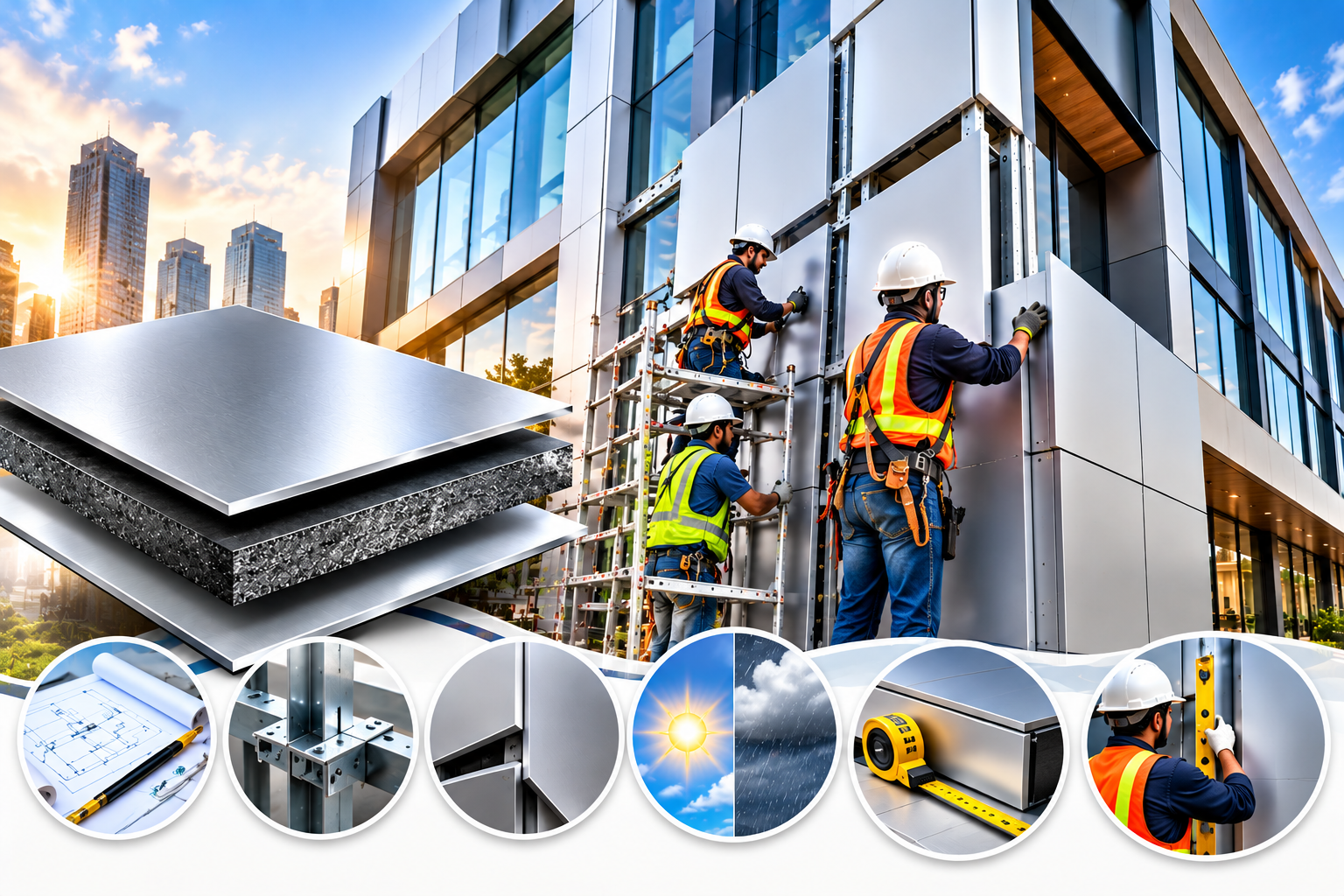
Composite panels generally contain two aluminum skins bonded to a core.
However, individual specifications can differ considerably.
Core composition, skin thickness, overall thickness, and manufacturing characteristics influence panel behavior.
Aluminum composite material should therefore be evaluated using the technical properties of the proposed specification.
Understand the Importance of Core Selection
The central core contributes to the panel’s physical characteristics.
Different core formulations may also exhibit significantly different fire behavior.
The appropriate choice depends on applicable regulations and the requirements of the complete wall assembly.
Unverified assumptions about material classification should be avoided.
Review Structural Requirements
Exterior cladding must withstand expected environmental loads.
Wind pressure and suction are particularly important for elevated facades and exposed building locations.
The engineering assessment should consider panel dimensions, support spacing, and attachment capacity.
Aluminum composite material may require different support arrangements depending on its thickness and configuration.
Account for Thermal Movement
Temperature changes cause aluminum surfaces to expand and contract.
Designers must provide suitable movement allowances in the cladding arrangement.
Joint dimensions and attachment details should reflect the expected temperature range and system requirements.
Evaluate Finish Performance
Architectural coatings influence both appearance and environmental resistance.
Finish selection should consider ultraviolet exposure, expected cleaning frequency, local pollution, and the desired visual effect.
Aluminum composite material with a suitable exterior finish may maintain its appearance effectively when installed and maintained according to the relevant recommendations.
However, finish performance should be supported by appropriate documentation.
Check Fabrication Compatibility
Panel cutting, routing, folding, and edge preparation depend on the selected material.
Complex architectural designs may require specific fabrication methods.
Before finalizing the layout, project teams should confirm that the proposed shapes and dimensions can be produced within the material’s limitations.
This helps reduce construction delays and unnecessary waste.
Consider Maintenance and Environmental Impact
Long-term planning should include access for inspection and cleaning.
Difficult-to-reach facade sections may require additional maintenance considerations.
Environmental assessment should examine manufacturing impacts, material efficiency, expected service life, and end-of-life processing.
Aluminum composite material contains recoverable metal, but recycling feasibility depends on how the bonded components are handled.
Verify Documentation Before Approval
The final selection should be supported by relevant test reports, installation requirements, and applicable compliance information.
Project teams should confirm that the proposed panel and assembly meet the necessary technical criteria.
Conclusion
Selecting aluminum composite material involves much more than choosing a color or surface finish. Panel construction, core composition, structural loading, thermal movement, fabrication capabilities, and maintenance requirements all influence suitability. A disciplined evaluation process helps architects and builders identify appropriate specifications while reducing avoidable construction problems. By examining the material within the context of the complete building envelope, project teams can make informed decisions that support architectural quality, technical compliance, and reliable long-term performance.