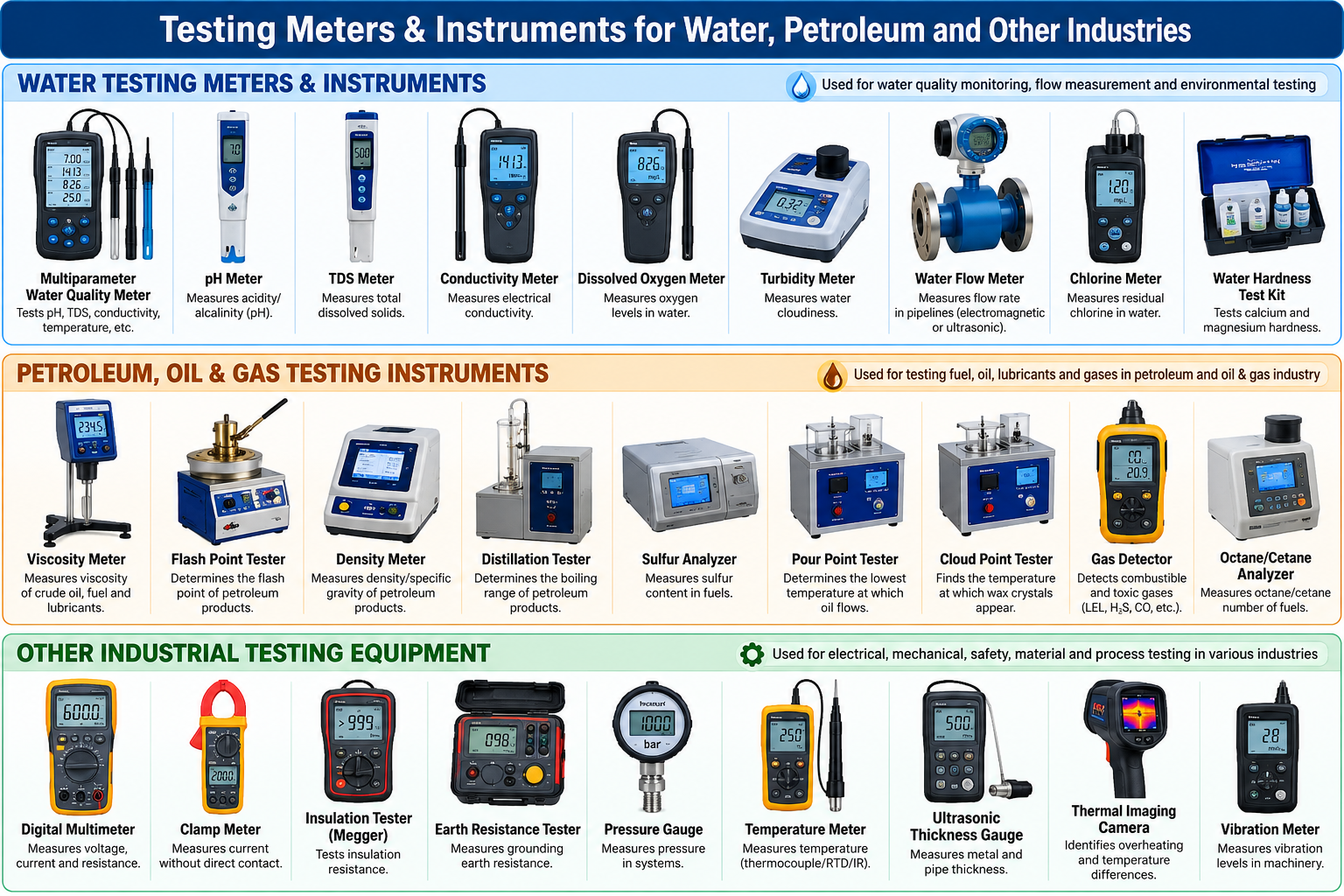
Crude oil contains a complex mixture of hydrocarbons and naturally occurring impurities. Among the contaminants that require attention are inorganic salts, which may enter petroleum production streams through associated formation water. A salt in crude analyzer helps laboratories assess salt contamination so that petroleum processing operations can better understand feedstock quality.
Why Salt Content Matters
Salt contamination can create operational difficulties during crude oil processing.
Certain chloride salts may contribute to corrosion problems when processing conditions allow corrosive compounds to form.
Salt-containing deposits may also interfere with equipment performance.
Understanding contamination levels helps facilities evaluate crude oil treatment and processing requirements.
Sources of Salt Contamination
Crude oil frequently contains small amounts of water originating from underground reservoirs.
This water may contain dissolved inorganic salts.
When water remains dispersed in crude oil, it can carry salts into subsequent processing operations.
The concentration and composition vary with crude origin and handling conditions.
Understanding Salt Measurement
Salt analysis aims to estimate the concentration of salt-related constituents in crude oil.
Several analytical approaches are available, depending on the required method and sample characteristics.
Electrical Measurement Techniques
Certain established methods use electrical properties associated with salt-containing components in a prepared sample.
The response is compared with appropriate calibration information to estimate salt concentration.
The measured result depends on the procedure and assumptions used by the method.
Alternative Laboratory Methods
Other approaches may involve extracting water-soluble salts and measuring specific ionic constituents.
These techniques can provide complementary information when a more detailed understanding of contamination is required.
Importance of Representative Sampling
A salt in crude analyzer cannot compensate for a poorly collected sample.
Crude oil may contain unevenly distributed water droplets, suspended particles, and other components.
Sampling and homogenization procedures are therefore important.
Handling Water-Containing Samples
Improper mixing may cause a small laboratory portion to contain more or less salt-bearing water than the original material.
The laboratory must follow the applicable procedure to obtain a representative test portion.
Preventing Contamination
Sample containers and preparation equipment should be suitable for petroleum testing.
Residues from previous samples may affect measurements, particularly when analyzing low concentrations.
Factors Influencing Analytical Results
Crude oil composition can affect the performance of certain analytical methods.
Water content, emulsion behavior, and interfering substances may influence sample preparation or instrument response.
Calibration Quality
Calibration materials should match the requirements of the selected procedure.
Regular verification helps identify changes in instrument performance.
Temperature and Preparation
Temperature can influence sample handling and the behavior of crude oil mixtures.
Laboratories should maintain the conditions specified by their analytical methods.
Role in Petroleum Processing
Salt analysis is relevant to crude oil evaluation and treatment operations.
Desalting Performance
Petroleum processing facilities may use salt measurements to assess the effectiveness of crude desalting operations.
Comparing appropriately collected samples before and after treatment provides information about changes in salt contamination.
Feedstock Evaluation
Different crude sources can exhibit different contamination characteristics.
Laboratory measurements support the assessment of incoming material quality.
Corrosion Risk Investigation
Salt-related measurements can contribute to investigations of corrosion conditions.
However, corrosion behavior also depends on operating temperature, water chemistry, process design, and other factors.
Salt concentration alone does not fully determine corrosion risk.
Laboratory Quality Practices
Reliable analysis requires appropriate method selection, calibration, sample handling, and result documentation.
Personnel should also follow safety procedures for handling petroleum samples and any flammable solvents used during preparation.
Conclusion
A salt in crude analyzer supports the evaluation of inorganic salt contamination in petroleum samples. Its usefulness depends on representative sampling, controlled preparation, suitable analytical procedures, and consistent quality checks. By interpreting salt measurements alongside other crude oil characteristics, laboratories can provide information that supports petroleum processing, contamination assessment, and operational decision-making.